Friday, September 29, 2017

Fashionista on Broad!

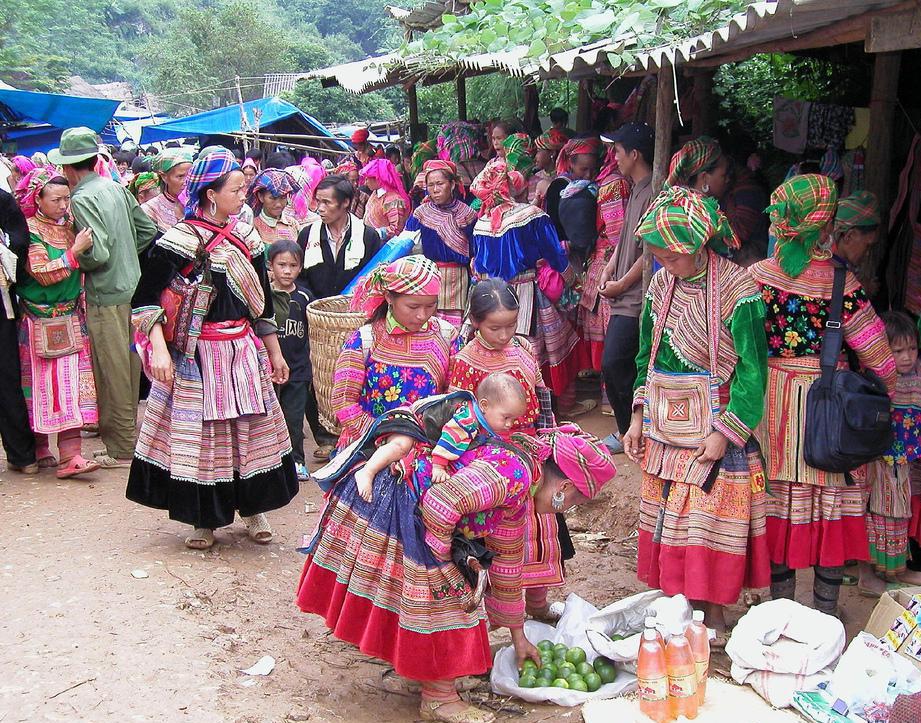
    Welcome Back! Today I will be addressing about the Traditional Hmong Clothes. There are a varieties of Hmong clothes from very traditional to modernize Hmong clothes. From the early post, the different dialects such as Hmong Daw and Hmong Njua have different clothes to differentiate to two dialects. 
   
    Hmong Daw have a black shirt with blue sleeves to go along with a white skirt such as the picture below. This clothing helped other Hmong Daw speakers to know that the person or the group of people spoke their dialect. It will be easier for the Hmong Daw people to recognize their own group as Hmong Daw can't understand Hmong Njua. 
   
    As for Hmong Njua, their outfit are that of a black shirt with design sleeves. Their skirt consist of a design with red, black and green fabric to differentiate them from the Hmong Daw people. With language barrier, it is easier for them to stay within their own group of people that spoke the same language to avoid confusion. 

    These clothes are more of the traditional clothes as modern Hmong clothes have many different styles and pattern and are that of a mix and match like some outfit below.


    I hope you enjoy and like some of the outfits! Until next time, Bye!


Mother Language

    Welcome Back! In the early post, I talked about the history of the Hmong people. Today I will be explaining the language of the Hmong.
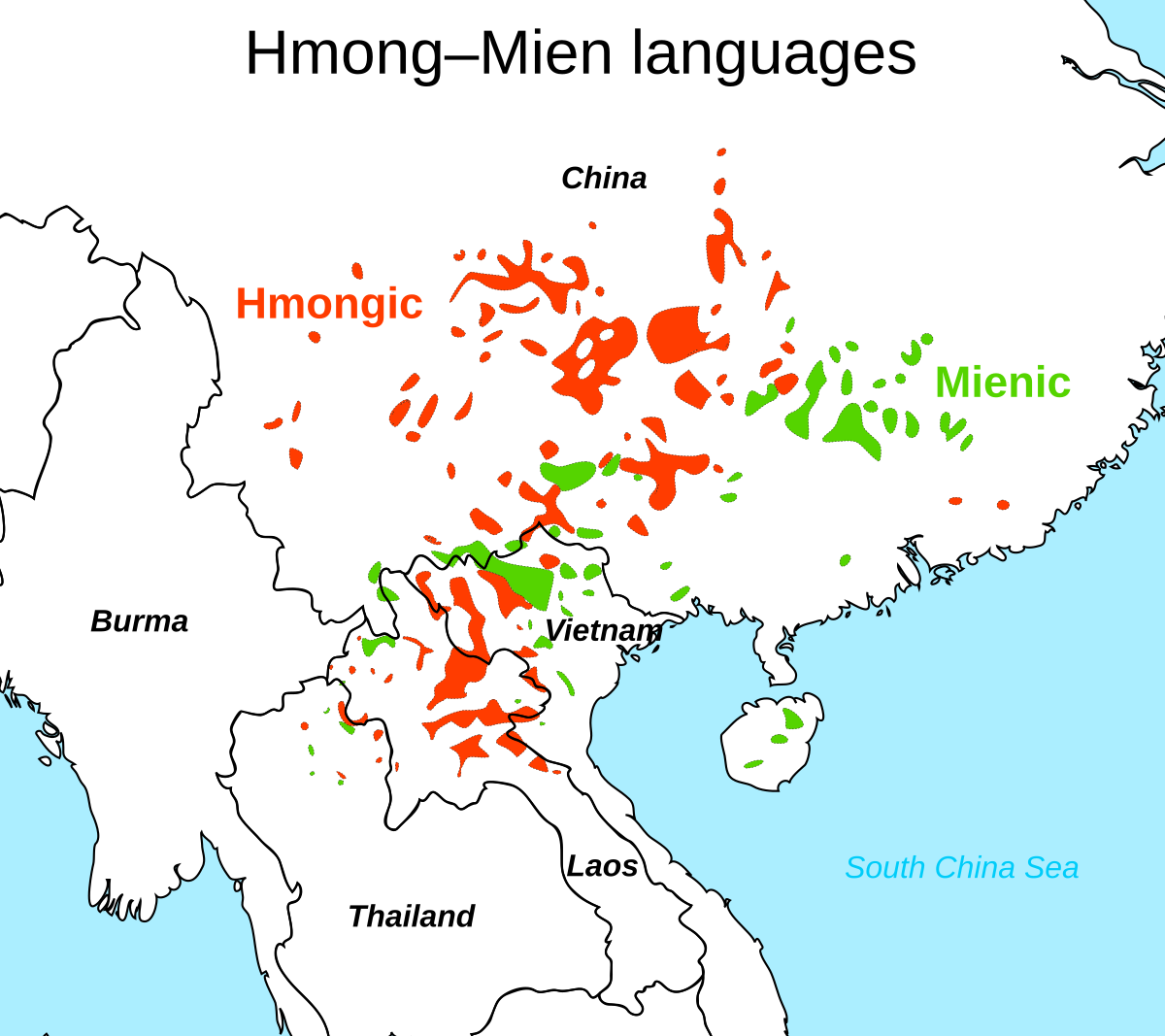
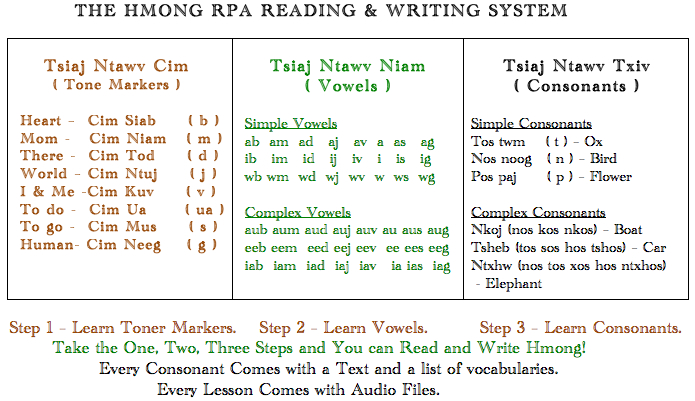
    The Hmong language mostly spoken today are Hmong Daw which is White Miao. This dialect is most popular in today Hmong society as 60% of most people and younger generation spoke this dialect. Another dialect is Hmong Njua which is Green Miao. This language is more of the older generation and about 40% of the Hmong speak this language. Hmong Daw(Duh) and Hmong Njua(Draw) came from the Miao language also known as the hmongic which was widen spoken by some ethnic group in Southern China and Southeast Asia. Hmong language is closely related to Mein and some other related language to the Hmong language are Hmu, Qo Xiong, Bunu, Pa-heng, She, Mun, and Biao Min. The Hmong language is a minority in China and about 2 people spoke this language.  


    Personally being Hmong myself, I spoke these two dialects in my every day life. My father side spoke Hmong Njua(green) and my mother side spoke Hmong Daw(white), so I was able to speak two dialects. From personal experience, Hmong Daw and Hmong Njua sometimes conflicts against each others as one word spoken in Hmong Daw can be say and interpret differently in Hmong Njua. This always cause me confusion between the two dialects. For example if my mom were to say the stainless steel kettle which is lus Qws(Lu-Qu), I wouldn't understand as I known the kettle as
lus Hwj Kais(Lu-Fuu-Kai).


Thursday, September 28, 2017

Story Telling of Ancient History

    Hey Guys and Girls! Ready for some story telling time. Today I will be talking about the History of the Hmong and how they came to be. It start out with a  princess falling in love with a poor servant. Their love was forbidden as she was royalty and he was just a nobody. They eloped into the mountain and slowly created a colony there. Just kidding, that not how it goes.
    The actual history of the Hmong people dated all the way back to ancient China roughly around 4,000-3,000 bce. According to the archives and archaeologists, the Hmong or Miao people live near the Yellow and Yangtze river who are one of the first people to cultivated rice. 


          The Hmong or Miao struggle to gain independence as the Imperial China surpassed smaller ethnic group and kingdom to unite the Chinese people. The Hmong live in remote area in China until Chinese ruler used unnecessary forced to outweighed the Hmong and other small ethnics group opposition. This cause the Miao Rebellion which account a large amounts of Hmong to migrated to the mountain area of Southeast Asia. Those area were known today as Thailand, Laos, Vietnam, and Myanmar. That how they Hmong or Miao people started.

(Miao)


(Hmong)